
By Dr. Michael Gofeld, MD PhD Unika Medical Centre
When back pain becomes persistent, the investigation usually centres on discs, nerves and joints. Almost no one looks at the deep muscles that hold each spinal segment steady. Yet in a large share of people with chronic or recurrent low back pain, those muscles are shrinking and being replaced by fat, and until that changes, the spine is working without one of its most important stabilisers.
The small muscle with a big job
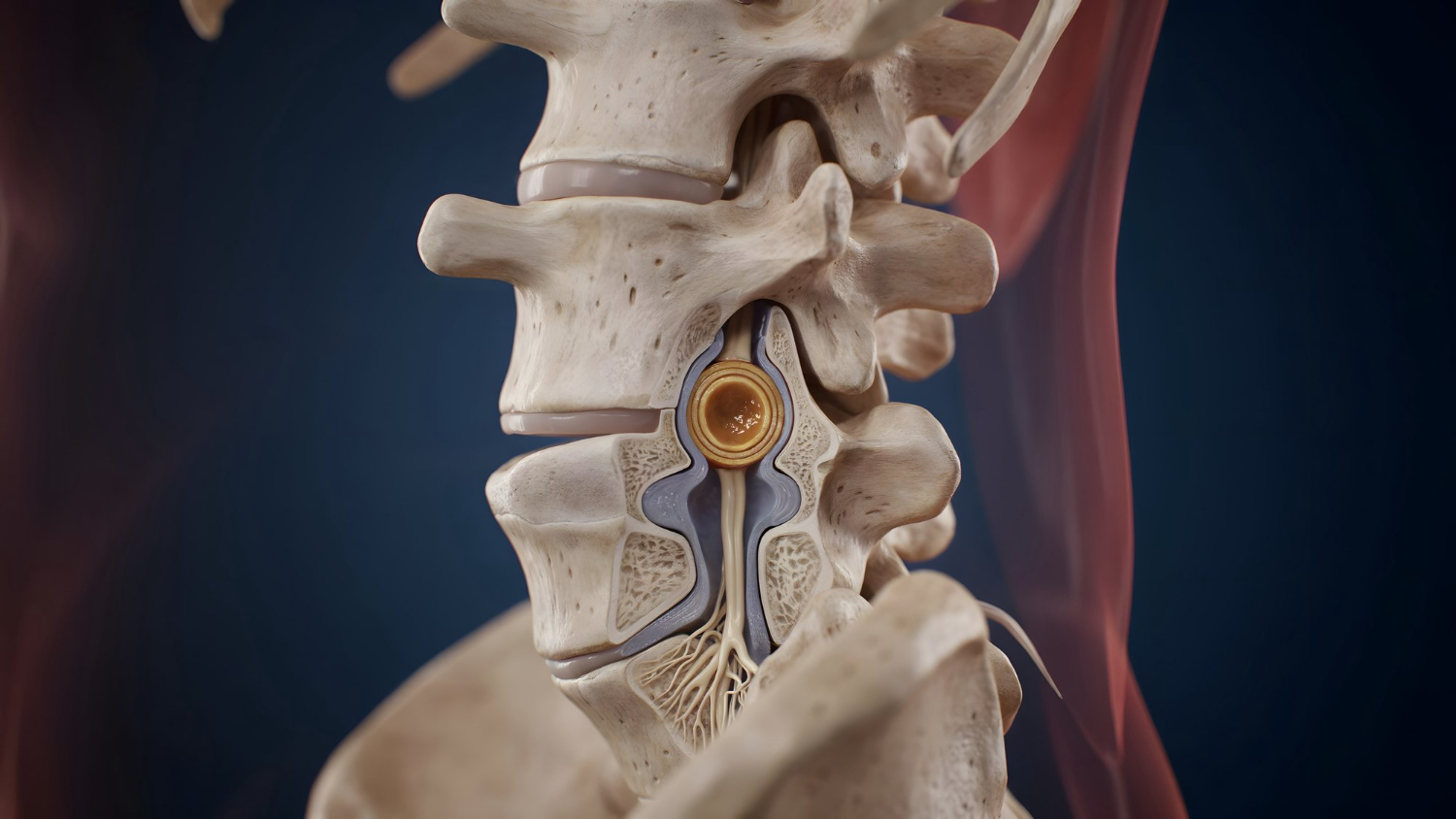
The lumbar multifidus is a series of short, dense muscle bundles lying directly against the back of the spine. Unlike the long muscles that bend and extend the trunk, the multifidus works segment by segment, controlling small movements between individual vertebrae and stiffening each level a fraction of a second before you lift, twist, or step. It is the spine’s first line of segmental control.
Because it is so closely tied to individual spinal levels, the multifidus is also one of the first muscles to react when something goes wrong at those levels.
What happens to the multifidus after a back injury
Within days of an acute back injury, the multifidus at the affected level is reflexively inhibited, and the nervous system effectively switches it down. The muscle loses bulk on that side and at that level, often quickly. Importantly, it does not simply come back when the pain settles. A well-known randomised study found that in people recovering from a first episode of acute low back pain, multifidus size did not recover on its own even after they returned to normal activity, whereas targeted retraining restored it faster and more completely.
Left unaddressed, the change becomes structural. Over months and years, functional muscle tissue is progressively replaced by fat — a process called fatty infiltration. Pooled imaging studies show that people with low back pain have more fat within the multifidus than people without it, and lower muscle quality has been linked to greater pain, disability and recurrence.
Why it is routinely overlooked
Muscle atrophy is visible on most lumbar MRI scans, but clinicians rarely grade or report it. Radiology reports are written to answer structural questions, such as disc herniation, nerve compression, stenosis, joint degeneration, and clinicians, in turn, focus on finding the “pain generator.” The muscle that should be protecting the injured segment goes unmentioned.
The result is a familiar cycle: the pain source is treated, symptoms improve, and months later the back fails again. Treating the pain generator without restoring the muscle leaves the spine without its segmental support — one reason relief so often does not last.
At Unika, we include paraspinal muscle condition in the diagnostic work-up, not as an afterthought. We review the muscles on your imaging alongside the discs, joints and nerves, because the treatment plan depends on both.
Why you can’t simply exercise it back
Active physiotherapy and specific exercise remain the foundation of multifidus rehabilitation. Training that retrains the deep stabilisers has been shown to reduce recurrence of back pain after a first episode. The difficulty is getting the right muscle to work.
Most people can contract their biceps on command — you can see it and feel it. The multifidus is different. It sits deep; it is not under strong conscious control, and once it has been inhibited, the larger surrounding muscles readily take over its job. Many patients perform core exercises diligently for months while the multifidus itself barely participates. A recent systematic review concluded, on moderate-quality evidence, that exercise alone does not reverse fatty infiltration in the paraspinal muscles of people with low back pain.
In other words, the problem is often not effort. It is access to the muscle.
Where electrical stimulation fits and its limits
Neuromuscular electrical stimulation can make a muscle contract when the brain cannot reliably do so, giving the nervous system a clear signal of what the correct contraction feels like. For the multifidus, however, the standard tools have real limitations:
- Surface electrodes placed on the skin lose most of their current through skin and subcutaneous fat before reaching a muscle that lies deep against the spine. In practice they are effective mainly in very lean individuals.
- Implanted stimulators that target the nerve supplying the multifidus are available in the United States and some other countries, but they are not licensed in Canada. They also require surgical implantation of leads and a pulse generator.
For most Canadians with multifidus dysfunction, this has left a gap: exercise alone may not reach the muscle, surface stimulation may not reach it either, and the implantable option isn’t available here.
Unika’s approach: muscle restoration without an implant
We developed a structured program that brings targeted stimulation to the deep spinal muscles without surgery or implanted hardware. It combines two components delivered in parallel:
- Weekly in-clinic stimulation sessions. Using ultrasound guidance, a very fine needle is positioned in the deep paraspinal muscle at the affected level, and a controlled electrical stimulus produces a strong, targeted contraction that surface electrodes cannot reach. The needle is removed at the end of each session, and nothing is implanted.
- Specialised spine physiotherapy. Our physiotherapists use the stimulated contraction as a template, teaching you to recognise and reproduce it voluntarily, then progressively loading the muscle through functional, activity-specific exercise.
The goal is not passive muscle twitching. Stimulation restores the signal; physiotherapy converts it into control you own. As voluntary activation improves, the program shifts progressively toward active training so that the result carries over into the activities that matter to you: work, sport and daily life.
Who may benefit
Candidacy is determined after a full spine assessment. The program may be appropriate if you have:
- Persistent or recurrent low back pain, particularly pain centred in the back rather than the leg
- Evidence of paraspinal muscle atrophy or fatty infiltration on imaging
- Difficulty activating the deep stabilising muscles despite a course of physiotherapy
- Back pain that improved after a procedure but returned
It is not a substitute for diagnosis. If nerve compression, instability, or another structural problem drives your back pain, we address that first.
Diagnosis first, then targeted restoration
At Unika, every plan starts with a precise diagnosis. A spine specialist assessment, review of your imaging (including the muscles), and a coordinated plan with our team. Restoring the multifidus is not an add-on to that model. For many patients, it is the missing step.
| Ready to have your back properly assessed? |
Unika Medical Centre · 20 De Boers Drive, Suite 207, North York, ON · 647-740-1429 |
Frequently Asked Questions
Is multifidus atrophy reversible?
Muscle size and activation can improve with targeted rehabilitation, particularly when started early. Established fatty infiltration is harder to change, and evidence suggests general exercise alone is often not enough — which is why our program pairs direct stimulation with specialised physiotherapy.
Will my MRI report mention multifidus atrophy?
Usually not. Muscle changes are often visible on lumbar MRI but are rarely graded or described in the report. At Unika, the muscles are reviewed as part of your assessment.
Why can’t I just do core exercises?
Core exercises help, but the multifidus is difficult to activate voluntarily, and larger muscles tend to compensate. Many people exercise consistently without fully engaging the multifidus. Stimulation gives the muscle and your nervous system a clear signal to build on.
Does the program require surgery or an implant?
No. Stimulation is delivered through a fine needle placed under ultrasound guidance during each weekly session and removed afterward.
Are implanted multifidus stimulators available in Canada?
Implantable systems that stimulate the nerve to the multifidus are approved in the United States and some other countries but are not currently licensed in Canada.
How long is the program?
Program length is individualised based on your assessment and how quickly voluntary control returns. We review your plan regularly and progress you toward independent, active training.
Do I need a referral?
Yes. Ask your family doctor or specialist to send a referral to Unika Medical Centre.