
Targeted procedures that address the source of your pain without surgery
Chronic spine pain is rarely the result of a single problem, and it should never be treated that way. At Unika Medical Centre, every patient is assessed by a physician specialist before any procedure is recommended. When intervention is indicated, we offer a range of minimally invasive treatments, each selected for its specific diagnosis, not because it is the most convenient or obvious option available.
The procedures described on this page are performed by spine and interventional specialists in a dedicated procedure suite or an accredited outpatient facility. Recovery times are short. Risks are low. And the goal is always the same: meaningful, durable relief.

What Minimally Invasive Means Here
Minimally invasive is an accurate description of the techniques we use, but it is also a clinical commitment. None of these procedures involves general anesthesia, hospital admission, or a lengthy recovery. Most are performed under local anesthesia (freezing), with fluoroscopic (X-ray) guidance to ensure precision. Patients go home on the same day.
What it does not mean is random or reflexive. The right procedure depends on the right diagnosis. Our physicians, including spine specialists and neurosurgeons, complete a thorough evaluation before recommending any intervention. If a procedure is not appropriate for the specific condition, we will tell why, discuss and find suitable evidence-based alternatives.
Intradiscal Ozone Therapy
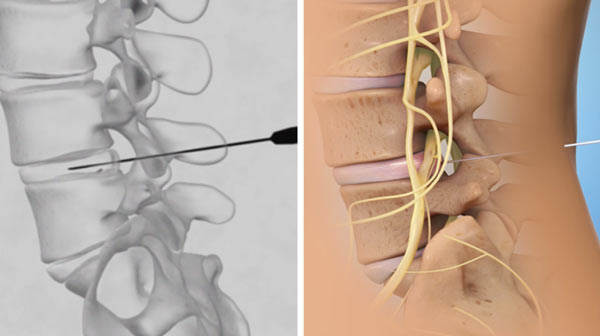
Intradiscal ozone therapy is an emerging minimally invasive treatment for discogenic low back pain and disc herniation. It involves the injection of a precisely calibrated mixture of ozone and oxygen directly into the affected intervertebral disc
A growing body of international clinical evidence — particularly from Italy, Spain, and Latin America, where the technique has been in broader use for over two decades — supports its effectiveness in selected patients.
How it works
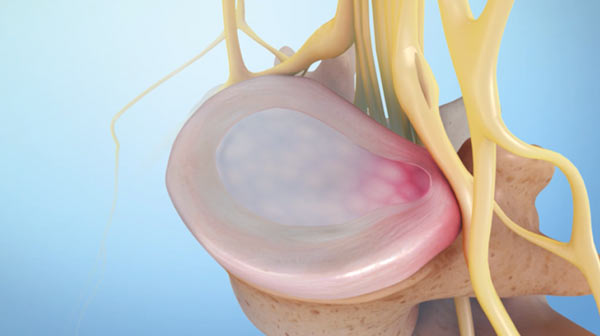
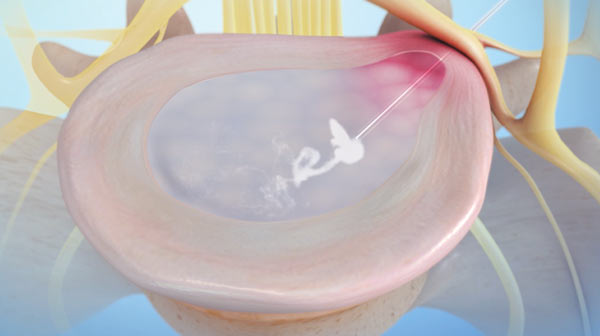
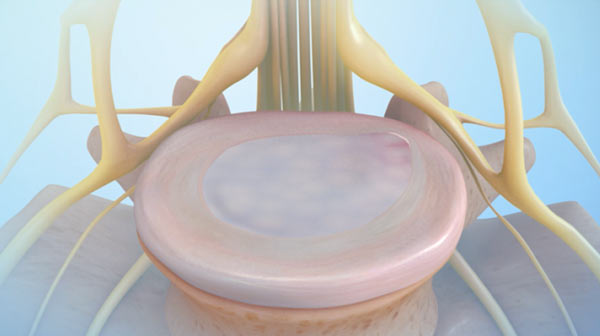
Ozone(O3) breaks down and dehydrates a small proportion of jelly-like center of the disc called the nucleus pulposus. The ozone shrinks the disc and the herniation. This shrinkage reduces the pressure of the herniation pressing on the local nerves which causes pain. Effective, pain relief begins within the first week after injection and continues for another 6-8 weeks to maximum pain relief.
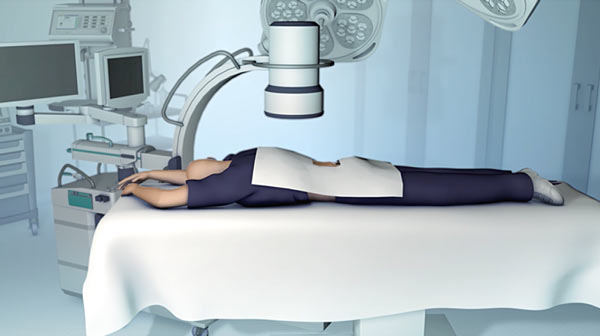
The procedure is performed under fluoroscopic guidance. A fine needle is positioned precisely within the disc, and the ozone-oxygen mixture is introduced under controlled conditions. The procedure is carried out in the procedure suite under local anaesthesia, takes approximately 20 to 30 minutes, and does not require sedation or hospital admission.
Candidates
Intradiscal ozone therapy may be considered for patients with:
- Discogenic radicular leg pain with or without back pain with lumbar disc herniation confirmed on MRI
- Mild disc degeneration with preserved or largely preserved disc height
- Inadequate response to conservative care including physiotherapy and conventional injections
- Interest in a minimally invasive, biologically targeted approach prior to consideration of surgical options
Basivertebral Nerve Ablation
Vertebrogenic low back pain is a distinct and often underdiagnosed condition. In some patients with chronic axial low back pain, the source is an inflammatory condition of the end plates — the parts of the vertebrae located above and below the discs. A small nerve that runs through the vertebral body becomes sensitized in the presence of endplate damage, called Modic changes, which are visible on MRI. Standard injections do not target this nerve. Basivertebral nerve ablation does.
How it works
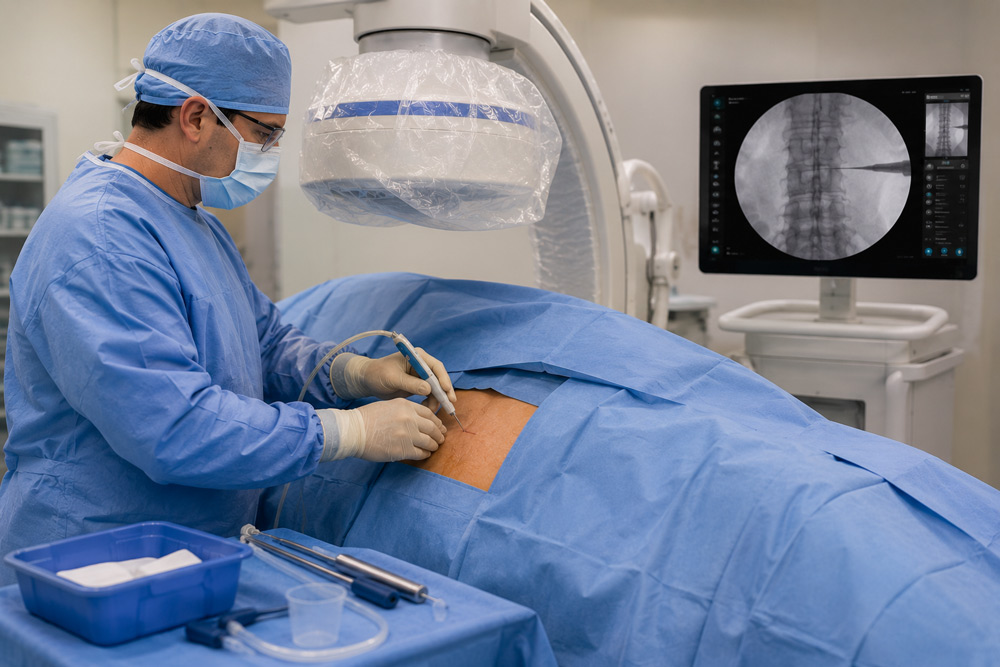
Using fluoroscopic guidance, a radiofrequency probe is navigated through a small puncture into the centre of the affected vertebral body. Controlled thermal energy is then delivered to ablate the basivertebral nerve, interrupting the pain signal at its origin. The procedure targets the vertebral body itself, not the disc or facet joints, making it appropriate for a specific subset of patients who have not responded to other interventions.
The procedure is performed in a procedure suite using a special radiofrequency ablation system. One or two vertebral levels may be treated in a single session.
Candidates
BNVA is most appropriate for patients with:
- Chronic axial low back pain of 6 months or longer
- Modic type 1 or type 2 endplate changes at one or two lumbar levels on MRI
- Failure of conservative care, including physiotherapy and spinal injections
- Pain primarily in the lower back, without a significant radiation to leg
Intradiscal Thermal Treatment and Decompression
For patients with discogenic pain — pain originating from within the disc itself, often worsened by prolonged sitting or forward flexion — a combined intradiscal procedure that addresses both the mechanical and biological components of disc-related symptoms may be recommended.
How it works
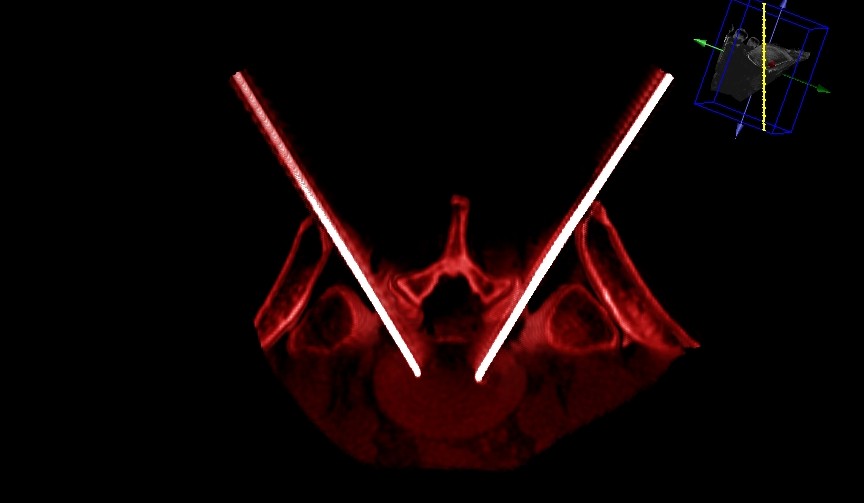
Intradiscal decompression procedure (IDDP) combines two mechanisms in a single procedure: mechanical decompression of the disc nucleus and controlled thermal treatment of the inner disc wall (annulus fibrosus). The thermal component targets the nerve fibres and pain-generating tissue within the damaged annular wall, while the decompression element reduces pressure within the disc.
Performed in a procedure suite under local anesthesia with fluoroscopic guidance, the procedure requires only a small skin entry point and takes approximately 30 to 45 minutes. Patients are observed briefly following the procedure and typically discharged the same day.
Candidates
IDDP may be appropriate for patients with:
- Discogenic low back pain confirmed or suspected on MRI and clinical assessment
- Annular tears, internal disruption and contained herniation
- Pain provoked by axial loading, prolonged sitting, or flexion activities
- Failure of conservative measures over a reasonable trial period

Intradiscal PRP (Platelet-Rich Plasma)
The intervertebral disc has a poor blood supply, limiting its natural healing capacity. Intradiscal PRP is a regenerative intervention that introduces a concentrated preparation of the patient’s own growth factors directly into the disc, with the goal of supporting the biological environment for tissue repair and reducing discogenic pain.
How it works
A blood sample is taken from the patient and processed by centrifugation to isolate platelet-rich plasma — a preparation rich in growth factors involved in tissue repair and modulation of inflammation. Under fluoroscopic guidance, this autologous preparation is injected into the affected disc. Because the material is derived entirely from the patient’s own blood, the risk of adverse systemic reaction is minimal.
Intradiscal PRP is classified as an autologous, minimally invasive procedure. It is typically performed in conjunction with a diagnostic and clinical assessment confirming discogenic pathology.
Candidates
Intradiscal PRP may be considered for patients with:
- Discogenic low back pain with MRI evidence of disc pathology
- Mild to moderate disc degeneration with preserved disc height
- Annular tear (incomplete)
- Inadequate or incomplete response to physiotherapy and conventional injection therapies
- Interest in a biologically based approach to pain management
MILD — Minimally Invasive Lumbar Decompression
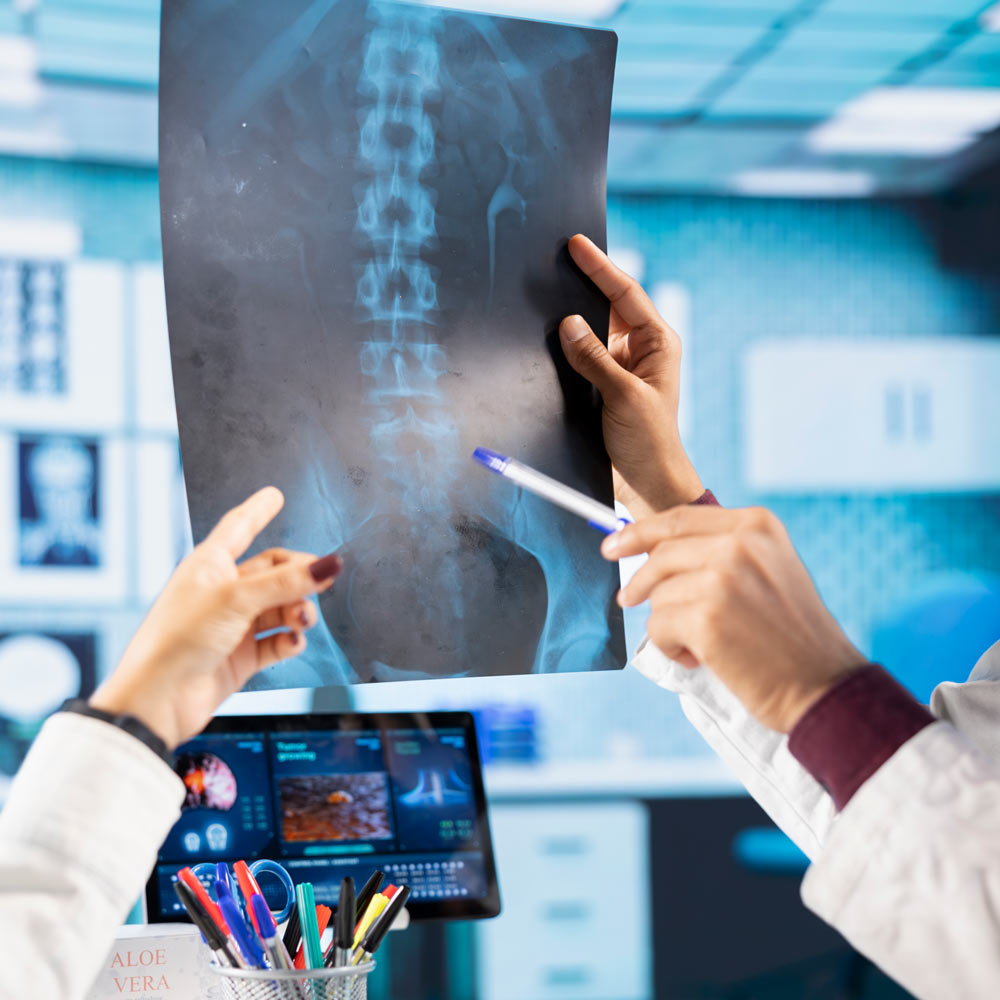
Lumbar spinal stenosis — narrowing of the spinal canal — is one of the most common causes of pain, cramping, and leg weakness in adults over the age of 50. For patients in whom this narrowing is caused significantly by hypertrophic ligamentum flavum, MILD offers a percutaneous decompression option that restores spinal canal space without fusion, implants, or general anesthesia.
How it works
Using fluoroscopic guidance, a small access port is introduced through the skin at the affected spinal level. Specialized tools are used to remove excess ligamentum flavum tissue — the thickened ligament at the back of the spinal canal that contributes to the narrowing. As this tissue is removed, the canal space is restored, reducing pressure on the spinal cord and exiting nerve roots.
MILD is performed at a hospital outpatient facility. The procedure typically takes less than an hour, and patients are generally able to stand and walk within a short time after the procedure. No implants are placed. No fusion is required.
Candidates
MILD is appropriate for patients with:
- Lumbar spinal stenosis with neurogenic claudication — leg pain or cramping that worsens with walking and improves with sitting
- MRI evidence of thickened ligamentum flavum contributing to canal compromise on 1-2 levels
- Symptoms that limit walking capacity and quality of daily life
- Inadequate response to conservative care, including physiotherapy and epidural steroid injections
Why Patients Choose Unika Medical Centre
Unika Medical Centre is Toronto’s only non-hospital-based outpatient clinic that brings together interventional pain specialists, a neurosurgeon, and specialized spine physiotherapy under a single roof. That means your diagnostic assessment, procedural care, and rehabilitation are coordinated by a team with shared clinical context — not fragmented across separate facilities.
Our approach is built on a straightforward principle: the right diagnosis before any treatment. We do not offer random injections or apply the same procedure to every patient with back pain. We conduct a thorough evaluation, review your imaging, and recommend the most appropriate intervention for your specific condition.
If a minimally invasive procedure is not the right answer for you, we will tell you that — and work with you to find a solution.
Ready to find out whether a minimally invasive procedure is right for you?
Speak with your family doctor about a referral to Unika Medical Centre.
Our spine specialists accept referrals from family physicians and other specialists.
Frequently Asked Questions
Minimally Invasive Spine Treatments - What Patients Ask
We understand that any spinal procedure raises questions. Below you will find straightforward answers to the questions our patients ask most often — about what each procedure involves, who it is appropriate for, what to expect on the day, and how to take the next step.
If your question is not answered here, speak with your family doctor about a referral to Unika Medical Centre. Our physicians will review your history and imaging and give you a direct answer.
General Questions
It means the procedure is performed through a small puncture or tiny skin entry point — not a surgical incision. There is no general anaesthesia, no hospital admission, and no lengthy recovery. Most procedures are done under local anaesthesia with real-time imaging guidance, and patients go home the same day.
You will not know until you have been assessed by a physician. At Unika Medical Centre, every patient undergoes a thorough clinical evaluation and imaging review before any procedure is recommended. The right treatment depends entirely on the source of your symptoms — which is why we start with diagnosis, not with a procedure menu.
We ask that patients speak with their family doctor about a referral to Unika Medical Centre. Our specialists accept referrals from family physicians and other healthcare providers across the GTA. If you are unsure how to proceed, your family doctor can guide you through the referral process. If you are specifically seeking a non-OHIP treatment option, you do not need a referral but we still ask you to have all medical documents available.
Coverage varies by procedure. Some procedures may be covered under the OHIP; others are offered on a private-pay basis. Our team will provide clear information about fees and coverage at the time of your consultation.
Please bring any relevant imaging — MRI, CT, or X-ray — along with reports from previous assessments or treatments. A summary from your family doctor or referring physician is also helpful. The more context your physician has on the first visit, the more useful the consultation will be.
Intradiscal Ozone Therapy
It is a minimally invasive procedure in which a carefully calibrated mixture of ozone and oxygen is injected directly into the affected intervertebral disc. Ozone breaks down and dehydrates a small portion of the nucleus pulposus, which results in reducing internal disc pressure which relieves pressure on the nearby nerve roots.
Intradiscal ozone therapy is not currently approved by Health Canada as a standard procedure. It is available under special access considerations for patients who meet specific clinical criteria. Before proceeding, patients receive a full explanation of the evidence, available alternatives, and the regulatory status of the treatment in Canada, and are asked to provide informed consent.
Important
If you are considering intradiscal ozone therapy, please raise this directly at your consultation. Your physician will explain the access framework and what it means for you before any decision is made.
The technique has been in broad clinical use for over two decades in Italy, Spain, parts of Latin America and Asia, where a substantial body of evidence has accumulated. It is used at specialist spine centres in those regions as part of the standard treatment pathway for disc herniation and discogenic pain.
The procedure is performed in our procedure suite under local anaesthesia, guided by fluoroscopy (real-time X-ray). A fine needle is positioned precisely within the disc, and the ozone-oxygen mixture is introduced under controlled conditions. The procedure takes approximately 20 to 30 minutes. No sedation or hospital admission is required. Patients are observed briefly and discharged the same day.
Patients who may be considered include those with disc herniation or discogenic low back pain confirmed on MRI, radicular leg pain associated with disc compression, and inadequate response to physiotherapy and conventional injections. Suitability is confirmed at consultation.
This depends on the individual patient and the response to the initial treatment. Your physician will discuss the anticipated treatment course at consultation based on your specific findings. Most patients require one injection, but in some cases a repeat injection may be helpful.
Basivertebral Nerve Ablation (BNVA)
The basivertebral nerve runs through the centre of each vertebral body. In patients with certain types of endplate damage — visible on MRI as Modic changes — this nerve can become sensitised and generate significant axial low back pain. It is a distinct and often underdiagnosed source of chronic back pain that does not respond to standard disc or facet injections.
Using fluoroscopic guidance, a radiofrequency probe is navigated through a small puncture into the centre of the affected vertebral body. Controlled thermal energy is delivered to ablate the nerve, interrupting the pain signal at its origin. The procedure targets the vertebral body itself — not the disc or the facet joints.
Vertebrogenic pain — pain originating from the basivertebral nerve — is typically axial (centralised in the lower back rather than radiating into the leg), chronic, and associated with Modic type 1 or type 2 changes on MRI. Your physician will review your imaging and clinical history to determine whether this is the likely source of your symptoms.
Most patients experience a period of localised soreness following the procedure, which typically resolves within a few days. Return to normal daily activities is generally possible within a short period. Your physician will provide specific guidance based on your individual circumstances.
Yes. One or two vertebral levels may be treated in a single session, depending on the clinical findings.
Physician note
BNVA requires confirmed Modic endplate changes at the symptomatic level on MRI. Accurate patient selection is essential — the procedure is not appropriate for all types of low back pain.
Intradiscal Thermal Decompression
It is a combined minimally invasive procedure that addresses discogenic pain — pain originating from within the disc itself — through two simultaneous mechanisms: mechanical decompression of the disc nucleus, and controlled thermal treatment of the inner disc wall (annulus fibrosus). The thermal component targets nerve fibres and pain-generating tissue within the damaged annular wall.
Unlike a single-mechanism procedure, intradiscal thermal decompression treats both the pressure component and the pain-generating tissue within the disc wall in a single session. It is appropriate for a specific subset of patients whose pain originates from annular damage and disc pressure — which is why accurate diagnosis before treatment matters.
Discogenic pain originates from within the intervertebral disc itself, rather than from a compressed nerve or a facet joint. It is typically worsened by prolonged sitting, forward bending, or axial loading, and is often associated with annular tears or internal disc disruption visible on imaging.
The procedure is performed in our procedure suite under local anaesthesia, guided by fluoroscopy. It requires only a small puncture and takes approximately 30 to 45 minutes. Patients are observed following the procedure and discharged the same day.
Recovery varies by patient. Most patients are advised to avoid strenuous activity for a short period following the procedure. Your physician and physiotherapy team will provide a structured recovery plan tailored to your condition and goals.
Physician note
Intradiscal thermal decompression is not indicated for severe disc degeneration with significant loss of disc height, or for patients with primarily facet-mediated or radicular symptoms. Suitability is confirmed at consultation following imaging review.
Intradiscal PRP (Platelet-Rich Plasma)
Platelet-rich plasma (PRP) is prepared from the patient’s own blood by centrifugation, concentrating the growth factors involved in tissue repair and inflammation modulation. When injected directly into the affected disc, it introduces a biologically active preparation that supports the local environment for healing. Because the material comes entirely from the patient’s own blood, the risk of adverse systemic reaction is minimal.
No. Intradiscal PRP is an autologous preparation derived from the patient’s own blood — it does not involve stem cells, donor material, or any cell-based therapy. It is classified as a minimally invasive, autologous biological procedure.
PRP is not a structural repair. It creates a more favourable biological environment within the disc that may support the disc’s own limited capacity for recovery and reduce the inflammatory signals contributing to pain. Expectations should be calibrated accordingly — your physician will discuss realistic outcomes at consultation.
Patients with discogenic low back pain, MRI evidence of disc pathology, mild to moderate degeneration with preserved disc height, and inadequate response to physiotherapy and conventional injections may be considered. Patients who prefer a biologically based approach before considering surgical options are often interested in this treatment.
It is one component of a broader treatment plan. At Unika Medical Centre, PRP is always considered in the context of a complete assessment and is typically combined with physiotherapy and rehabilitative guidance to optimise outcomes.
Physician note
Outcomes from intradiscal PRP vary by patient. This is not a cure for disc degeneration. The procedure is offered as part of an individualised treatment plan developed in consultation with your physician.
MILD — Minimally Invasive Lumbar Decompression
Spinal stenosis is a narrowing of the spinal canal in the lower back that places pressure on the spinal cord and the nerves that exit it. It is one of the most common causes of pain, cramping, and leg weakness in adults over 50. Symptoms typically worsen with walking and improve with sitting or bending forward — a pattern known as neurogenic claudication.
MILD (Minimally Invasive Lumbar Decompression) is a percutaneous procedure that restores space within the spinal canal by removing excess ligamentum flavum — the thickened ligament at the back of the canal that contributes significantly to the narrowing in many patients. Using fluoroscopic guidance, specialised instruments are introduced through a small puncture at the affected level to remove this tissue precisely. No implants are placed. No fusion is required.
MILD is most appropriate for patients with lumbar spinal stenosis causing neurogenic claudication, MRI evidence of thickened ligamentum flavum contributing to canal narrowing, limited walking capacity that affects daily life, and inadequate response to physiotherapy and epidural steroid injections. A full clinical and imaging review confirms suitability.
MILD is performed at a hospital outpatient facility. The procedure typically takes under one hour. Patients are generally able to stand and walk shortly afterwards and do not require an overnight stay.
Clinical studies have shown that MILD can meaningfully improve walking capacity and reduce leg and back pain in appropriately selected patients with stenosis. As with all procedures, outcomes vary by individual. Your physician will discuss realistic expectations based on your specific degree of stenosis and overall condition.
MILD is a percutaneous procedure that removes tissue through a small puncture, without cutting, implants, or fusion. Fusion surgery involves stabilising two or more vertebrae with hardware and bone graft, requires general anaesthesia, and carries a longer recovery. MILD is appropriate for patients in whom ligamentum flavum thickening is a primary driver of stenosis and who are not candidates for, or wish to avoid, open surgery.
Physician note
MILD is most effective when hypertrophic ligamentum flavum is a primary contributor to stenosis. Patients with predominantly bony stenosis or significant instability may require a different approach.
Still have questions?
Speak with your family doctor about a referral to Unika Medical Centre.
Our spine specialists accept referrals from family physicians and other healthcare providers across the province and beyond.

